Introduction
Modern wellness technology increasingly focuses on helping people build consistent routines around relaxation, sleep, focus, and stress management. Alongside familiar tools such as meditation apps, breathing exercises, sleep trackers, and fitness wearables, a newer category of devices uses non-invasive electrical stimulation as part of a guided wellness routine.
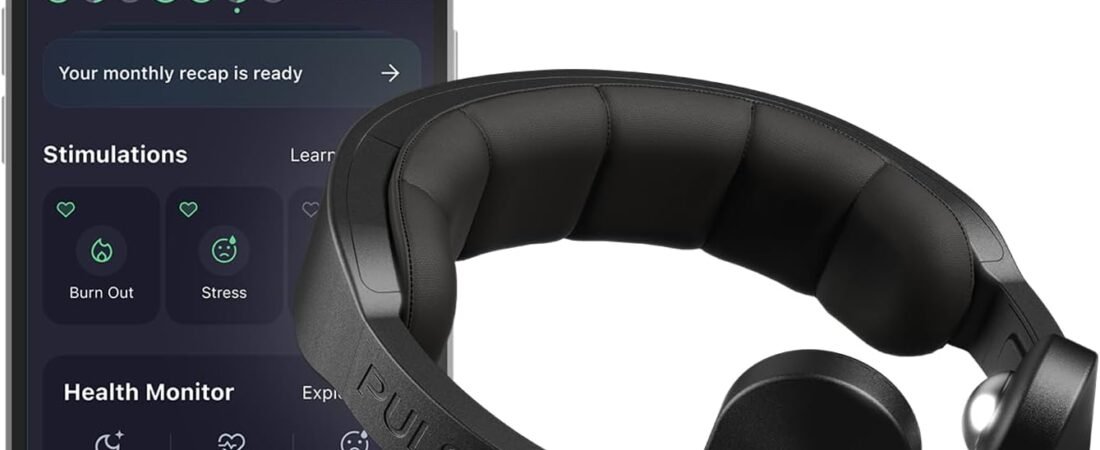
The Pulsetto FIT (V2) Wellness Wearable, associated with Amazon listing ASIN B0FF52W7X7, belongs to this category. It is a neck-worn wellness device designed around transcutaneous vagus nerve stimulation, or tVNS, and works together with the Pulsetto mobile application. The manufacturer’s current information describes the FIT as a hands-free device with dual stimulation, multiple wellness programs, a rechargeable battery, and app-based session guidance.
The basic concept is different from that of a conventional smartwatch. A smartwatch generally focuses on measuring information such as activity, heart rate, or sleep. The Pulsetto FIT is instead designed to deliver a guided stimulation session as part of a relaxation or wellness routine.
According to Pulsetto’s current product information, the FIT is designed for short sessions and includes programs related to areas such as sleep, stress, anxiety, pain, and burnout. The manufacturer also describes additional app functionality involving personalized protocols and integrations with platforms such as Apple Health, Garmin, Whoop, and Oura.
It is important, however, to distinguish wellness support from medical treatment. A consumer wellness device should not automatically be interpreted as a treatment for a medical condition, and the existence of research into transcutaneous vagus nerve stimulation does not establish that every commercially available device produces the same clinical outcomes.
Research into tVNS is an active area of study. Reviews have reported generally favorable tolerability in research settings, but researchers also emphasize differences in stimulation methods, study quality, and the need for additional high-quality evidence.
For someone considering a wellness wearable such as the FIT (V2), the most useful approach is therefore to understand what the device is designed to do, how it fits into a daily routine, what its app contributes, and what limitations should be considered.
Understanding the Pulsetto FIT (V2)
The Pulsetto FIT is a wearable stimulation device intended to be positioned around the neck. It uses electrodes that contact the skin and delivers controlled electrical pulses during a session.
The manufacturer’s current description refers to the technology as a dual-stimulation system and states that the device is designed to provide hands-free stimulation.
Rather than requiring the user to manually operate the device throughout a session, the general workflow involves connecting the device to the mobile application, applying conductive gel to the contact areas, positioning the device around the neck, and selecting an available program. Pulsetto describes the setup as taking under three minutes.
The app is an important part of the overall system.
The hardware provides the stimulation, while the application provides the interface for selecting programs, controlling sessions, and accessing related wellness content. Depending on the current software offering, some features may be available through the free portion of the application while additional programs or personalized functions may be offered through premium access.
This device-and-app approach makes the FIT different from a simple electrical stimulation unit with physical buttons and preset controls.
Key Features
Neck-Worn, Hands-Free Design
The FIT is designed to be worn around the neck during a stimulation session.
Pulsetto describes the FIT as having an ergonomic design intended to accommodate different neck sizes, with removable padding options intended to improve fit.
A hands-free format can be useful for people who prefer not to hold a device throughout a session.
The user can potentially sit comfortably while following a guided routine through the application.
The neck placement is also central to the device’s intended stimulation approach. This means correct positioning is important rather than simply placing the device anywhere on the body.
Transcutaneous Vagus Nerve Stimulation
The FIT uses a form of transcutaneous vagus nerve stimulation.
“Transcutaneous” means that stimulation is delivered through the skin rather than through an implanted device.
This distinguishes the approach from implanted vagus nerve stimulation systems used in clinical medicine.
Research into non-invasive vagus nerve stimulation has examined a range of potential applications. A 2018 systematic review of human studies reported that tVNS was generally well tolerated in the studies reviewed, while skin irritation, headache, and other adverse effects were among the reported events.
More recent research continues to examine the technique in different contexts. For example, a 2025 systematic review of tVNS for drug-resistant epilepsy found generally mild and transient adverse effects in the studies analyzed, while also noting methodological limitations and the need for further research.
These findings concern tVNS research generally, not proof that the Pulsetto FIT treats any particular medical condition.
That distinction is important when evaluating wellness technology.
App-Based Wellness Programs
The Pulsetto application provides the interface for choosing and managing sessions.
Pulsetto’s current product page lists five core programs, including Sleep, Stress, Anxiety, Pain, and Burnout, while premium access can provide additional programs and personalization features.
Program names should not automatically be interpreted as medical treatment claims.
For example, a program labeled “Sleep” can be understood as a session designed around a sleep-oriented wellness routine. It does not mean that the device has been established as a treatment for insomnia or another sleep disorder.
This distinction is particularly important for consumers who may be searching for technology to support general relaxation rather than seeking treatment for a diagnosed condition.
Short Daily Sessions
Pulsetto positions the device around relatively short sessions rather than requiring the user to wear it continuously.
The current product information describes sessions that can be completed in several minutes, depending on the selected program. The company’s sleep guidance, for example, describes using the device approximately 30 minutes before bed with a longer session.
Short sessions can make a wellness routine easier to integrate into an existing schedule.
A user might establish a consistent routine after work, before meditation, during an evening wind-down period, or before preparing for sleep.
The important consideration is consistency rather than assuming that longer sessions are necessarily better.
Rechargeable Battery
The FIT uses a rechargeable battery.
Pulsetto currently states that the FIT provides approximately 12 days of battery life, describing this as an improvement over the Lite model.
Actual battery duration can vary depending on usage frequency, session length, connectivity, and other factors.
Rechargeable operation makes the device easier to maintain as part of a recurring wellness routine because users do not need to replace disposable batteries after every few sessions.
USB-C Charging
The current Pulsetto product information lists a USB-C cable among the items included with the device.
USB-C charging is convenient because the connector is widely used across modern electronics.
As with other rechargeable electronics, it is sensible to use the charging equipment and procedures recommended by the manufacturer.
Gel-Based Electrode Contact
The FIT uses conductive gel at the electrode contact points.
Pulsetto’s setup instructions specifically describe applying electrode gel before positioning the device on the neck. The current product information lists a 60g gel tube as included with the device.
The gel helps establish electrical contact between the electrodes and skin.
This is an important practical difference between the FIT and wellness devices that do not use skin-contact electrodes.
Users should follow the manufacturer’s instructions concerning application, cleaning, and replacement of gel.
Compatibility With iOS and Android
Current product information states that the Pulsetto application works with iOS and Android devices. A retailer listing for the FIT specifies compatibility with iOS 12.0 and later and Android 6.0 and later, although users should verify current app requirements before setup because mobile operating-system requirements can change over time.
The smartphone is effectively the control interface for the wearable.
This means a compatible mobile device is part of the overall experience rather than an optional accessory.
Wearable Data Integrations
Pulsetto’s current app information lists integrations with platforms including Apple Health, Garmin, Whoop, and Oura.
The purpose of these integrations is to allow the wellness application to work alongside information collected by other wearable ecosystems.
This can be useful for people who already maintain a digital wellness routine and want different types of information in one broader ecosystem.
However, users should distinguish between data integration and medical interpretation.
Connecting wearable data to an application does not automatically make the resulting information clinically diagnostic.
How It Can Be Used
As Part of a Morning Routine
Some people prefer beginning the day with a deliberate period of quiet activity.
A short wellness session could be combined with:
- Breathing exercises
- Light stretching
- Journaling
- Meditation
- Planning the day
- A quiet breakfast
The device can become one component of that routine.
The objective should be to create a repeatable habit rather than expecting the wearable to replace broader healthy lifestyle practices.
During an Afternoon Reset
A busy workday can make it difficult to create a clear transition between tasks.
A short session may be used as a deliberate pause between periods of concentrated work.
For example, a user could step away from the computer, sit somewhere quiet, connect the device, and follow a selected session through the application.
This type of routine can provide a clear boundary between activities.
During an Evening Wind-Down
The FIT may also be incorporated into an evening routine.
An evening routine might include:
- Reducing bright screen exposure
- Dimming room lighting
- Preparing for the next day
- Reading
- Gentle breathing
- Relaxation exercises
- A guided wellness session
Pulsetto specifically describes a sleep-oriented routine involving a session before bedtime.
The device should be considered one element of the overall routine rather than a substitute for established sleep habits.
Before Meditation
People who already meditate may use a stimulation session before beginning their meditation practice.
The sequence could be:
- Find a quiet location.
- Apply the recommended gel.
- Position the wearable correctly.
- Start the selected session.
- Transition into a breathing or meditation exercise.
This can create a structured ritual around relaxation.
During Travel
The relatively portable nature of the wearable can make it relevant to people who maintain wellness routines while traveling.
A traveler may use it in a hotel room or another suitable private location.
However, the user should remember to bring the device, charging cable, gel, and compatible smartphone.
As Part of a Digital Wellness Routine
The FIT can also sit alongside other digital tools.
For example, someone might use:
- A smartwatch for activity information
- A sleep tracker for sleep metrics
- A meditation application for guided sessions
- A journal for subjective observations
- Pulsetto for stimulation sessions
This approach allows each tool to serve a different function.
The key is not to confuse measurements from one device with outcomes supposedly caused by another.
Creating a Consistent Routine
A wellness device is easier to evaluate when its use is consistent.
Instead of using it at random times, a person could select a routine that naturally fits their schedule.
For example:
Morning: short session after waking.
Afternoon: optional relaxation session during a break.
Evening: sleep-oriented session before the normal bedtime routine.
Not every person needs multiple daily sessions.
The appropriate schedule should follow the manufacturer’s instructions and the user’s individual circumstances.
Keeping a simple record can also help.
A journal could include:
- Date
- Time of session
- Program used
- Approximate session length
- Subjective relaxation level
- Sleep duration
- General sleep quality
- Notes about unusual sensations or discomfort
This is more useful than assuming that every change is caused by the device.
Who It May Be Suitable For
People Interested in Structured Relaxation
Someone looking for a structured way to create a daily relaxation routine may appreciate having a defined session rather than relying entirely on memory or motivation.
Adults Interested in Wellness Technology
The FIT is relevant to people who enjoy experimenting with technology designed around relaxation, mindfulness, sleep routines, and general wellness.
Users Who Already Use Wearables
People who already use Apple Health, Garmin, Whoop, Oura, or similar ecosystems may be interested in how the Pulsetto application fits alongside their existing digital wellness tools.
People Who Prefer Guided Sessions
The app-based approach can be useful for people who prefer having a predefined program rather than manually selecting electrical stimulation parameters.
Travelers
Its wearable design can be convenient for users who want to maintain a familiar wellness routine while away from home.
People Exploring Non-Invasive Neuromodulation
Individuals interested in learning about non-invasive stimulation technologies may find the FIT relevant as a consumer wellness product.
However, people with medical conditions or specific treatment goals should discuss the technology with an appropriate healthcare professional rather than assuming that a consumer wellness device is a substitute for clinical care.
Important Things to Consider
It Is a Wellness Device, Not a Replacement for Medical Care
This is perhaps the most important consideration.
The FIT is marketed as a wellness wearable, and the manufacturer’s current materials frame it around relaxation, sleep, stress management, and related wellness experiences.
Research into tVNS is broader than the specific claims that can reasonably be made about one consumer product.
A person with a diagnosed sleep disorder, cardiovascular condition, neurological condition, psychiatric condition, chronic pain condition, or another health concern should not use a wellness device as a substitute for professional diagnosis or treatment.
Research on tVNS Is Still Developing
Non-invasive vagus nerve stimulation has been studied in a range of populations and conditions.
A 2024 scoping review identified 109 studies involving transcutaneous auricular vagus nerve stimulation across 21 clinical populations, demonstrating the breadth of research interest.
At the same time, researchers continue to identify limitations involving stimulation methods, study design, sample sizes, and outcome measures.
For sleep specifically, a 2026 systematic review of transcutaneous auricular vagus nerve stimulation reported improvements in several sleep-related measures but emphasized heterogeneity between studies and the preliminary nature of the evidence.
These findings should not be interpreted as proof that the Pulsetto FIT will produce a specific outcome for an individual user.
People With Implanted Devices Should Seek Medical Advice
Pulsetto’s current product information advises users with implantable devices to consult a doctor before using the device.
This is an important safety consideration because electrical stimulation can interact with certain implanted electronic or medical devices.
Anyone with an implanted medical device should follow the manufacturer’s safety guidance and obtain appropriate professional advice before use.
Skin Sensitivity Can Matter
The device uses electrodes that contact the skin and conductive gel.
Research on tVNS has reported skin irritation among some participants. A systematic review identified local skin irritation as one of the more common reported side effects in the studies it evaluated.
Users should pay attention to skin reactions and follow the product instructions regarding electrode contact and gel use.
Persistent irritation, significant discomfort, or unusual symptoms should not simply be ignored.
Electrical Stimulation May Feel Unfamiliar
A stimulation device can produce sensations that users are not accustomed to.
The intensity should be managed according to the manufacturer’s instructions rather than assuming that stronger stimulation is necessarily more effective.
The goal of a wellness routine should be a comfortable and controlled experience.
Correct Positioning Matters
Because the FIT is designed to stimulate through specific neck contact points, positioning matters.
The device should be placed according to the manufacturer’s instructions rather than moved arbitrarily around the neck.
Correct positioning also helps maintain consistent electrode contact.
Gel Is Part of the Routine
Unlike a device that simply rests against dry skin, the FIT requires conductive gel.
This introduces a small amount of preparation and maintenance.
Users should consider:
- Keeping the gel available
- Applying the appropriate amount
- Cleaning the device as instructed
- Replacing gel when necessary
- Maintaining clean electrode contact areas
This is a practical consideration when deciding whether the device fits naturally into a daily routine.
App Dependence
The FIT is designed to work with the Pulsetto app.
That means the experience depends partly on smartphone compatibility, application availability, Bluetooth connectivity, software updates, and account-related functionality.
Users who prefer completely standalone wellness equipment may prefer a simpler device category.
Premium App Features May Change
Pulsetto currently describes a free application with core programs and premium features that can provide additional programs and personalization.
Software offerings can change over time.
Anyone evaluating the long-term experience should check the current app structure rather than relying solely on an older description of included features.
Battery Life Is Usage Dependent
The manufacturer’s approximately 12-day battery-life figure provides a general reference point, but actual performance depends on usage.
Frequent sessions, longer sessions, connectivity, battery age, and environmental conditions can all influence how often the device needs charging.
Do Not Interpret Wearable Data as a Diagnosis
Integrations with health and fitness platforms can make it easier to review wellness information.
However, metrics such as sleep duration, heart rate, recovery indicators, or other wearable measurements are not automatically medical diagnoses.
They are best treated as informational data points within a broader context.
Comparing General Categories of Wellness Devices
Meditation and Breathing Apps
Meditation applications generally rely on audio guidance, breathing exercises, mindfulness instructions, or relaxation content.
They do not require electrical stimulation.
This makes them a different category of wellness technology, although both approaches can be incorporated into the same routine.
Sleep Trackers
Sleep trackers primarily collect information about sleep and related physiological patterns.
Their main purpose is measurement and monitoring rather than delivering stimulation.
A person could potentially use a sleep tracker alongside a wellness device, but the data should not be assumed to prove that one caused a change in the other.
Smartwatches
Smartwatches combine health, activity, communication, and general computing features.
They can monitor various metrics but generally do not have the same primary purpose as a dedicated stimulation wearable.
The FIT is more focused on guided wellness sessions than on continuous activity tracking.
Massage and Relaxation Devices
Massage devices use mechanical stimulation rather than electrical nerve stimulation.
They may target muscles or soft tissue and are commonly used for relaxation or recovery routines.
Their mechanism and intended use differ substantially from a vagus nerve stimulation wearable.
Consumer Electrical Stimulation Devices
TENS and related electrical stimulation products are another category.
These devices can use electrical impulses through electrodes, but their design, intended body locations, stimulation parameters, and regulatory status can differ significantly from a wellness-oriented vagus nerve stimulation wearable.
Consumers should not assume that two electrical stimulation products are interchangeable simply because both use electrodes.
Clinical Vagus Nerve Stimulation Systems
Implanted vagus nerve stimulation systems are medical technologies used in specific clinical contexts.
They are fundamentally different from a non-invasive consumer wearable.
The FIT does not involve surgical implantation.
This distinction is important when researching vagus nerve stimulation because information about implanted VNS should not automatically be transferred to a consumer wellness device.
Practical Setup Considerations
Start With the Manufacturer’s Instructions
Before the first session, read the current instructions supplied with the device.
Pay particular attention to:
- Charging
- App pairing
- Electrode placement
- Gel application
- Session selection
- Cleaning
- Safety warnings
- Contraindications and precautions
Prepare the Skin
Clean skin can provide more consistent electrode contact.
The user should follow the manufacturer’s instructions regarding skin preparation and gel.
Avoid experimenting with alternative conductive substances unless the manufacturer explicitly approves them.
Position the Device Carefully
The wearable should be placed around the neck according to the manufacturer’s positioning guidance.
The fit should be secure without becoming unnecessarily uncomfortable.
Choose a Suitable Program
The application provides different wellness programs.
A person interested in evening relaxation, for example, may choose a program designed for that part of the day.
The important point is to use programs for their intended wellness purpose and follow the app’s instructions.
Keep the Session Routine Simple
A session does not need to become a complicated ritual.
A quiet chair, comfortable posture, and a few minutes without distractions may be sufficient.
Combining the session with slow breathing or another established relaxation practice can create a consistent routine.
Clean and Store the Device Properly
After use, follow the manufacturer’s instructions for cleaning the electrode contact areas and storing the device.
Proper maintenance can help preserve the equipment and keep the contact surfaces suitable for future sessions.
Frequently Asked Questions
What is the Pulsetto FIT (V2)?
The Pulsetto FIT (V2) is a neck-worn wellness wearable designed around non-invasive vagus nerve stimulation. It works with the Pulsetto mobile application to provide guided wellness sessions related to relaxation, sleep, stress, and other areas.
What does FIT stand for?
The product is marketed as Pulsetto FIT, with the V2 designation referring to the current version of the hardware.
The product is designed as a hands-free wearable rather than a conventional smartwatch.
How does the FIT work?
The device uses electrodes positioned around the neck to deliver controlled electrical stimulation through the skin. The Pulsetto application provides session controls and wellness programs.
Does it stimulate the vagus nerve?
Pulsetto describes the FIT as a vagus nerve stimulation device. It uses non-invasive stimulation through the skin rather than an implanted system.
Can it help with sleep?
Pulsetto markets a sleep-oriented program and describes using the device as part of a pre-bedtime routine.
Research into transcutaneous vagus nerve stimulation has reported some sleep-related findings, but the evidence remains an evolving research area and should not be interpreted as a guarantee of improved sleep for an individual user.
Is it a medical device?
The product is presented by Pulsetto as a wellness device. It should not automatically be treated as a substitute for medical diagnosis or treatment.
Users with health conditions should consult an appropriate healthcare professional before using stimulation technology for a therapeutic purpose.
Can it be used every day?
Pulsetto presents the FIT as a device intended for regular wellness use and describes short daily sessions.
Users should follow the manufacturer’s current instructions regarding frequency and duration rather than creating their own stimulation schedule.
Does it require gel?
Yes. Pulsetto’s setup instructions describe applying electrode gel to the contact points before wearing the device.
Does it connect to a smartphone?
Yes. The FIT works with the Pulsetto mobile application, which provides session selection and related controls.
Does the app work with iPhone and Android?
Current product information states that the application supports iOS and Android devices. Exact operating-system requirements can change, so checking the current app listing before setup is advisable.
Does the FIT require Wi-Fi?
Pulsetto’s current product information states that the app includes an offline mode.
Some account, synchronization, or software features may still require internet access depending on the current application configuration.
How long does the battery last?
Pulsetto currently describes approximately 12 days of battery life for the FIT, with actual duration depending on usage.
Does it support Apple Health?
Pulsetto currently lists Apple Health among its wearable integrations, along with Garmin, Whoop, and Oura.
Can people with implanted devices use it?
People with implanted medical or electronic devices should consult a doctor before using the FIT. Pulsetto specifically advises medical consultation for users with implantable devices.
Can the FIT replace meditation?
It does not need to replace meditation.
Some users may choose to combine a stimulation session with breathing exercises, mindfulness, or meditation.
These are different approaches that can coexist within a broader wellness routine.
Can it replace treatment for anxiety or sleep disorders?
It should not be used as a substitute for professional evaluation or treatment of a diagnosed medical condition.
The names of wellness programs in an app should not be interpreted as proof that the device treats the corresponding medical condition.
Is transcutaneous vagus nerve stimulation safe?
Research reviews generally describe tVNS as reasonably well tolerated, although reported side effects can include skin irritation, headache, tingling, or other discomfort depending on the stimulation approach.
Individual suitability can vary, which is why manufacturer precautions and professional medical guidance matter for people with relevant health conditions.
Does stronger stimulation mean better results?
There is no sound basis for assuming that stronger stimulation is automatically better.
Users should follow the manufacturer’s recommended settings and should not increase stimulation beyond the intended range simply to seek a stronger sensation.
Can it be worn while sleeping?
The device is intended for short stimulation sessions rather than continuous overnight wear. Pulsetto’s sleep guidance describes a session before bedtime rather than leaving the device operating throughout the night.
Users should follow the current instructions rather than sleeping with the device unless the manufacturer specifically instructs otherwise.
Conclusion
The FIT (V2) Wellness Wearable represents a different approach to personal wellness technology. Rather than primarily measuring activity or sleep, it is designed to provide non-invasive electrical stimulation through a neck-worn device and combine that stimulation with guided sessions in a smartphone application.
Its hands-free design, rechargeable battery, conductive-gel system, multiple wellness programs, and integration with several digital health platforms give it a place within the growing category of connected relaxation and wellness devices. Pulsetto currently describes the FIT as supporting programs related to sleep, stress, anxiety, pain, and burnout, while additional app features can provide broader personalization.
The broader science behind transcutaneous vagus nerve stimulation is still developing. Research has examined safety and potential effects across several areas, and systematic reviews have reported generally favorable tolerability while also highlighting limitations in the available evidence.
For that reason, the most sensible way to view a device like the FIT is as a wellness tool rather than a guaranteed medical solution.
Its practical value may come from helping users establish a repeatable relaxation ritual: a few minutes away from work, a structured evening routine, or a deliberate pause during a busy day. The device can be used alongside established habits such as good sleep hygiene, regular physical activity, meditation, breathing exercises, and appropriate professional healthcare.
Compatibility and safety also deserve attention. Users should check smartphone requirements, follow the manufacturer’s instructions for electrode gel and positioning, maintain the device correctly, and seek medical guidance when relevant—particularly for people with implanted devices or other health considerations.
For anyone researching vagus nerve stimulation and connected wellness technology, understanding the distinction between consumer wellness support and clinical treatment is essential. The FIT (V2) is best understood within that context: a wearable system designed to make guided, non-invasive stimulation part of a structured daily wellness routine.
You can check more details on Amazon here.
Amazon Associate Disclosure: As an Amazon Associate, we earn from qualifying purchases.